
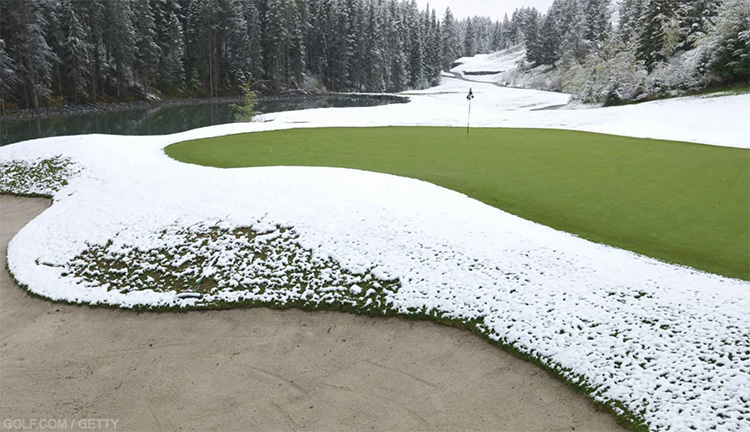
Winter is upon us, which means many courses across the country deal with challenging conditions created by colder weather. Golfers are a hearty bunch, but your local course will likely not be in midseason shape. When these conditions might interfere with fair lies, many facilities will play what are commonly referred to as “winter rules,” which are known in the Rules of Golf as Preferred Lies. This is covered by Model Local Rule E-3.
So, how does it work?
Winter rules allow a player to lift their ball in the fairway and place it on a different spot. The committee in charge or golf course should set the size of the relief area that the ball has to be placed in (such as 6 inches, a scorecard length or even a club-length). This distance uses the original location of the ball as the reference point, and the ball can’t be placed any nearer the hole than that point. Once lifted, the ball can be cleaned or even replaced with a different ball. If this process were to allow the player to go from fairway to fringe, or even from fairway to rough, that is OK as well.
Winter rules should generally be used only in the fairway of the hole being played. If they are extended to areas outside of the fairway, it could result in a player unfairly getting free relief from a place where the ball might otherwise not have been playable, such as in a bush or group of trees.
Once the player places the ball using the procedure above, it cannot be lifted again and must be played as it lies.
Utilizing winter rules is a great way to extend the season and enjoy the benefits of golf as long as the weather permits.
Article originally appeared on: Golf.com